
How to Search Buncombe County Traffic Court Records
The North Carolina eCourts Portal at portal-nc.tylertech.cloud is the official public search system for all Buncombe County court cases, including traffic and infraction matters. North Carolina brought all 100 counties onto the Enterprise Justice and Odyssey case management platform on October 13, 2025, so every open and closed traffic case in Buncombe flows through the same system. The Portal offers Smart Search for general case lookup, Search Hearings for finding court dates by name or case number, and Make Payments for eligible citations and infraction cases. All public access is free. No account is needed to search.
Before you start, know what you have. A citation number is the fastest path to a single case. If you only have a name, the Portal will return all matching records statewide unless you filter to Buncombe County. Have the name ready in Last, First Middle Suffix format. The Portal requires JavaScript and cookies to work, and it triggers a CAPTCHA check every five minutes for all users, whether logged in or not. Cards accepted for online payments are Visa, MasterCard, and Discover only. Digital wallets such as Apple Pay, Google Pay, Cash App, and Venmo are not accepted.
The Buncombe County payment information page on the N.C. Judicial Branch site shows current court fee, fine, and traffic citation payment details for the county.
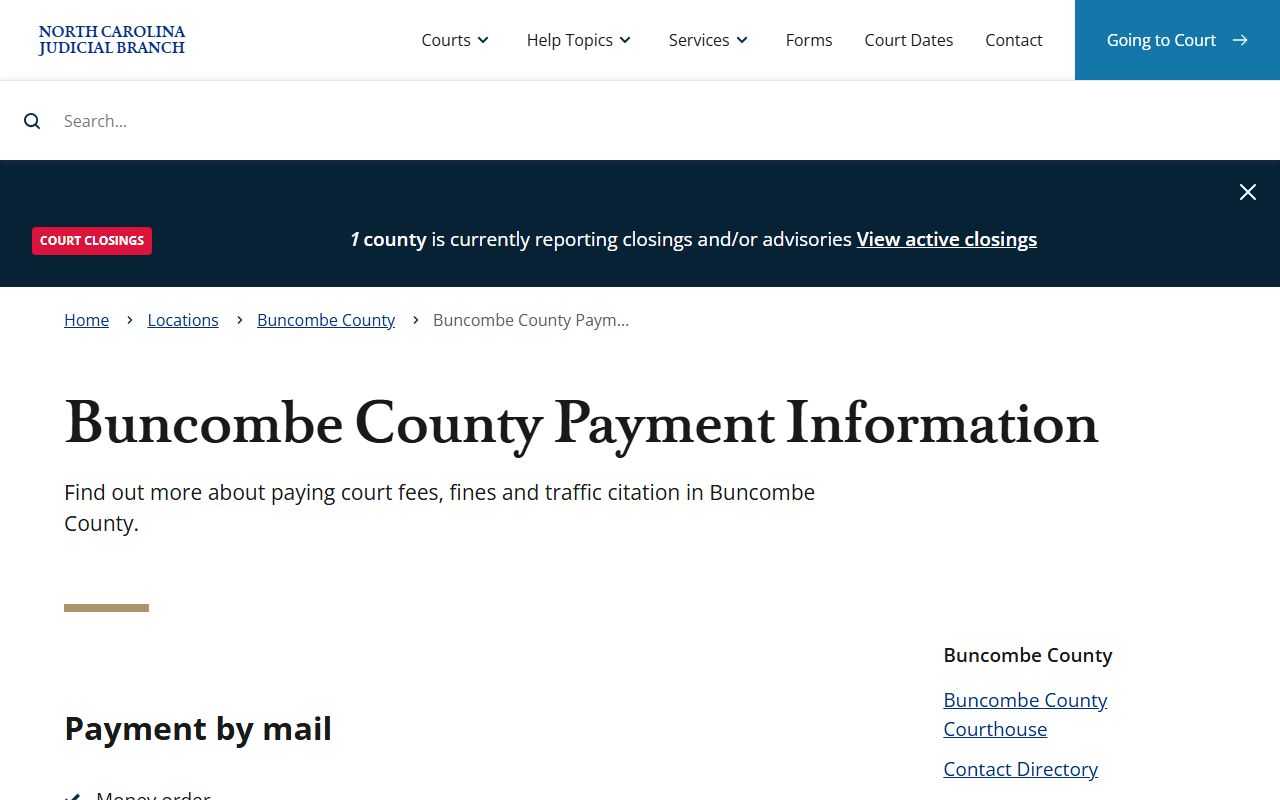
That page is also where the Clerk of Superior Court posts payment instructions, including methods accepted at the courthouse and options for mailing payments on eligible traffic citations.
- Open the NC eCourts Portal and choose Smart Search.
- Enter a citation or case number directly, or enter the driver's name in Last, First Middle Suffix format.
- Open Advanced Filtering Options and set the location to Buncombe County to limit results to local cases.
- Filter by case type (traffic or infraction) and case status if you need only open or only closed matters.
- Review the case detail, including the charge, hearing date, disposition, and payment eligibility status.
- To pay an eligible citation online, go to Make Payments on the Portal home; for a certified copy, contact the Clerk of Superior Court at the courthouse.
Which Courts Handle Traffic Cases in Buncombe County
Traffic violations in Buncombe County go through the North Carolina District Court system in District 40. District Court is the trial-level court for all misdemeanors and infractions under state law, and most traffic citations are infractions. Magistrates play a supporting role. They can accept guilty pleas for minor infractions and misdemeanors, set bond after a traffic arrest, and issue arrest warrants when a driver misses a required court date. When a traffic offense crosses into criminal territory, such as a serious impaired driving charge or a felony hit-and-run, it moves to Superior Court in District 40. The same Buncombe County court dockets system tracks hearing dates for all of these matters.
All courts in Buncombe County operate from the courthouse at 60 Court Plaza in Asheville. There are no separate municipal or city traffic courts in Buncombe County under the North Carolina unified court structure. State law consolidates traffic adjudication at the District Court level, so a citation issued anywhere in the county resolves in the same building.
| Court | Traffic Cases Handled | Address |
|---|---|---|
| District Court, District 40 | Infractions, moving violations, misdemeanor traffic offenses, speeding, equipment violations | 60 Court Plaza, Asheville, NC 28801 |
| Magistrate | Guilty pleas for minor infractions/misdemeanors, bail after traffic arrest, orders for arrest on failure to appear | 60 Court Plaza, Asheville, NC 28801 |
| Superior Court, District 40 | Felony traffic offenses, serious impaired driving, habitual impaired driving, appeals from District Court | 60 Court Plaza, Asheville, NC 28801 |
Types of Buncombe County Traffic Cases on Record
The range of traffic cases that appear in Buncombe County court records is wide. Most citations are infractions, which are not crimes under North Carolina law but still generate a court record and carry fines and potential points. Some traffic matters rise to the level of misdemeanors or felonies, which show up in the full criminal case record as well. The type of offense determines which court handles it, how the record is classified, and what options a driver has to contest or resolve it.
- Moving violations - speeding, running a red light, improper passing, following too closely, and other violations that occur while the vehicle is in motion; these are typically infractions.
- Misdemeanor traffic offenses - reckless driving, driving while license revoked, hit-and-run with property damage, and similar offenses that carry criminal penalties under state law.
- Equipment and registration violations - expired tags, defective lights or brakes, invalid inspection stickers, and other non-moving issues that generate a citation but not necessarily a court appearance.
- Commercial vehicle and CDL violations - weight limit violations, log-book infractions, hazardous-materials requirements, and other federal and state rules that apply specifically to commercial drivers.
- Impaired driving - DWI and DUI charges are criminal cases handled in District Court or Superior Court; they appear in both traffic-adjacent and full criminal case records.
What Buncombe County Traffic Court Records Show
A traffic case record in the eCourts Portal brings together the key facts from the citation and the court process. The fields below reflect what the system typically displays for a public traffic or infraction case. Certified official copies, which carry the court seal and are accepted in legal proceedings, must be requested from the Buncombe County Clerk of Superior Court at 60 Court Plaza. Online views are informational and are not certified documents.
| Field | What It Shows |
|---|---|
| Citation / Case Number | The unique identifier assigned to the traffic citation or court case at the time of filing. |
| Defendant Name | The name of the driver charged, in Last, First Middle Suffix format as entered by the court. |
| Offense / Charge | The specific traffic violation cited, including the statute or ordinance number. |
| Court Date | The date the driver is scheduled to appear or the date of a prior hearing. |
| Plea | The driver's formal response to the charge: guilty, not guilty, or responsible (for infractions). |
| Disposition | The outcome of the case, such as guilty, dismissed, prayer for judgment continued, or waiver of hearing. |
| Fine and Court Costs | The monetary amount owed, including the base fine and any assessed court costs. |
| Payment Status | Whether the fine has been paid, is unpaid, or whether the case is eligible for online payment through the Portal. |
Social Security numbers, financial account data, and other protected personal information do not appear in the public view. Sealed or expunged records drop out of the public portal entirely once a court order is entered.
Searching by Citation Number vs by Name in Buncombe County
Citation-number searches return one specific case and are much faster than name searches. If you have the number from the ticket itself, use it. Name searches are useful when the citation number is lost or when you are researching someone else's record, but they can return many results, especially for common names. The eCourts Portal applies wildcard rules that affect how name searches behave, so knowing the format saves time. For traffic hearings specifically, the Search Hearings tool on the Portal lets you filter by county, hearing type, judicial officer, and date, which helps narrow results without a citation number.
| Search Field | Type | Required | Notes / Format |
|---|---|---|---|
| Record Number / Citation Number | Text | Yes (or name) | Enter the full citation or case number from the ticket; wildcard requires at least 4 characters. |
| Last Name | Text | Conditional | Required for name-based search; wildcard minimum 3 characters followed by *. |
| First Name | Text | Conditional | Required with last name; wildcard minimum 1 character followed by *. |
| Middle Name | Text | Optional | Narrows name results when multiple defendants share the same first and last name. |
| Filter by Location | Dropdown | Optional but recommended | Select Buncombe County to limit results to local cases only. |
| Filter by Case Type | Dropdown | Optional | Choose traffic or infraction to screen out unrelated case types. |
| Filter by File Date Start / End | Date | Optional | Useful when searching by name and a general date range is known. |
Paying or Contesting a Buncombe County Traffic Ticket
Buncombe County traffic citations can be paid online, by mail, or in person at the courthouse. Payment methods and accepted instruments vary by channel. Paying a ticket is treated as a guilty or responsible plea, so anyone who wants to contest the charge should not pay before a hearing. If you are unsure whether to pay, consult an attorney first. The Buncombe County Clerk of Superior Court is the office that processes all traffic payments for cases in District 40.
The NC eCourts Make Payments portal is the online payment option for eligible citations. The site links directly from the eCourts Portal home page.
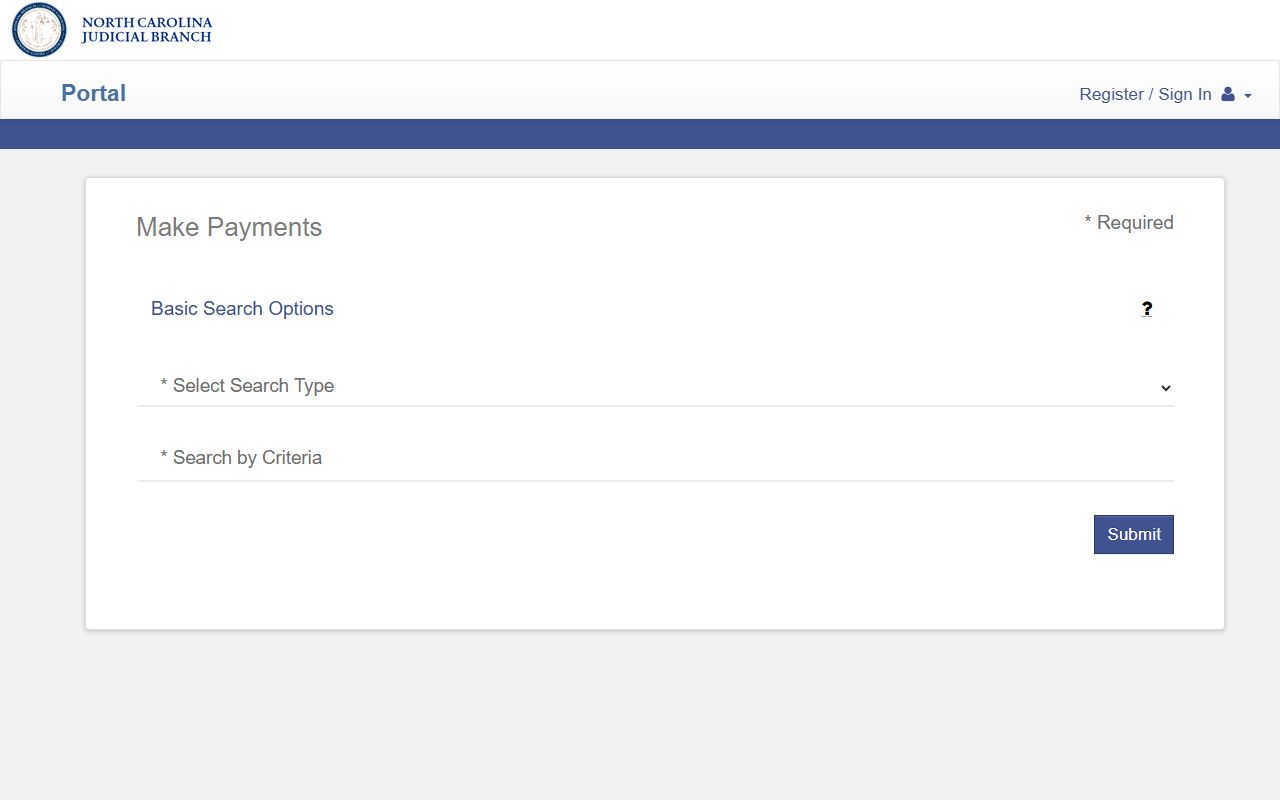
That payment screen is where online credit and debit card payments for eligible Buncombe County traffic citations are processed; confirm your citation number before starting.
| Method | Accepted | Not Accepted / Notes |
|---|---|---|
| Money order; certified check | No cash; no personal checks. Make payable to Buncombe County Clerk of Superior Court and mail to c/o Court Payments, 60 Court Plaza, Asheville, NC 28801. Include citation number. | |
| In Person | Cash; credit/debit card plus processing fees; money order; certified check | No personal checks. Pay at the Clerk's office on the first floor of the courthouse. Hours are Monday through Friday, 8 AM to 5 PM. |
| Online | Visa, MasterCard, Discover plus processing fees (if eligible) | Apple Pay, Google Pay, Cash App, Venmo, and similar digital wallets are not accepted. |
Missing a court date in Buncombe County has serious consequences. The Clerk issues a warning that failure to appear can result in an order for arrest and an additional financial penalty. An order for arrest is a judicial authorization for law enforcement to take the person into custody, and it appears as an open warrant in the statewide system. Do not ignore a traffic court date without contacting the Clerk or an attorney first.
- Search your citation in the eCourts Portal to confirm the hearing date, the charge, and whether the case is eligible for online payment.
- If you intend to pay and accept the citation, choose online, mail, or in-person payment before the court date shown on the ticket.
- If you intend to contest the charge, do not pay. Paying is a plea of guilty or responsible and waives your right to contest.
- Appear in Buncombe County District Court on the scheduled date. Arrive at least 30 minutes early; the courthouse at 60 Court Plaza has a security checkpoint with bag scan and metal detector.
- If you cannot attend, contact the Clerk of Superior Court or a licensed attorney before the court date to discuss your options; do not simply skip the hearing.
Public Access Laws for Buncombe County Traffic Court Records
North Carolina traffic court records are public records under the same legal framework that governs all court files. Chapter 132 of the North Carolina General Statutes is the Public Records Act. It defines public records broadly and gives anyone the right to inspect and copy them. Court records carry an additional layer. They are maintained by the Clerk of Superior Court under judicial branch authority, so official certified copies come from the Clerk rather than from a private database or the Portal alone. A small set of statutes carves out confidential material, but routine traffic and infraction case records are open.
Key Statutes:
N.C.G.S. § 132-1 - defines public records to include nearly all documentary material made or received by state or local agencies in connection with public business, establishing the default-open rule for court records.
N.C.G.S. § 132-6 - requires record custodians to permit inspection at reasonable times and provide copies promptly once lawful fees are paid.
N.C.G.S. § 132-1.10 - restricts disclosure of Social Security numbers, financial account data, driver license numbers, and similar personally identifiable information in public records, including court files.
For the full public records access framework in Buncombe County, including how to submit a records request, see the Buncombe County public records page.
Court Traffic Records vs State Driver Records in Buncombe County
Two separate records exist for most traffic violations, and they are not interchangeable. The court traffic record is the case file created by the Buncombe County Clerk of Superior Court when a citation enters the court system. It shows what happened in court: the charge, the plea, the disposition, and what fines were assessed. The state driver record is a separate file maintained by the North Carolina Division of Motor Vehicles. It reflects what the DMV knows about a driver's license status, any convictions reported to it by courts, points assessed, and any administrative sanctions such as license revocations or suspensions. The court sends conviction information to the DMV, but the two records are distinct files held by different agencies. Correcting an error in one does not automatically fix the other.
| Record Type | Record Source | What It Shows | How to Access | How to Correct Errors |
|---|---|---|---|---|
| Court Traffic Record | Buncombe County Clerk of Superior Court (District 40) | Citation number, court, charge and statute, court date, plea, disposition, fine and court costs, payment eligibility, and court compliance status | NC eCourts Portal (public view) or certified copy from the Clerk of Superior Court, 60 Court Plaza, Asheville, NC 28801, (828) 259-3400 | File a motion in the originating court if the record contains a factual error; contact the Clerk to confirm the correction has been entered |
| State Driver Record | North Carolina Division of Motor Vehicles (NCDMV) | License status, convictions reported by courts to the DMV, points assessed, CDL reporting, administrative sanctions, revocations, and suspensions | Request a certified driver record from the NCDMV driver records service | Contact NCDMV directly; if the error stems from a court conviction, the underlying court case may need to be addressed first |
CDL and Commercial Driver Records in Buncombe County
Commercial driver's license holders face stricter rules in Buncombe County traffic cases than non-commercial drivers. Federal regulations under 49 C.F.R. Part 383 prohibit states from masking or diverting CDL violations away from a driver's record. That means deferred adjudication, prayer for judgment continued, and other disposition tools that might shield a non-commercial driver's record from points generally do not apply to CDL holders when the violation was committed in a commercial vehicle. A CDL holder convicted of a serious traffic violation such as excessive speeding, reckless driving, or following too closely in a commercial vehicle faces mandatory disqualification periods that compound with prior offenses. Courts in Buncombe County must report qualifying convictions to the NCDMV, which then reports to the state of CDL issuance if different from North Carolina.
CDL holders with questions about how a specific Buncombe County traffic case may affect their commercial license should consult an attorney before resolving the case. The consequences of a CDL disqualification can affect the ability to work, so understanding the options before entering any plea matters.
DUI / DWI Cases in Buncombe County
Impaired driving charges in North Carolina, called DWI (driving while impaired), are criminal cases, not simple traffic infractions. A DWI arrest in Buncombe County generates a criminal case file in District Court or Superior Court, not just a traffic citation record. Because DWI is a criminal matter, it shows up in Buncombe County criminal records alongside the traffic-related case data. Buncombe County also operates a DWI Treatment Court as part of its recovery court program, which offers an alternative track for eligible defendants under close court supervision.
For full Buncombe County DWI case information, including how impaired driving records are filed, searched, and sealed, see the Buncombe County criminal records page.
The N.C. Judicial Branch DWI Treatment Court page describes the recovery court program that operates in Buncombe County for qualifying DWI defendants.
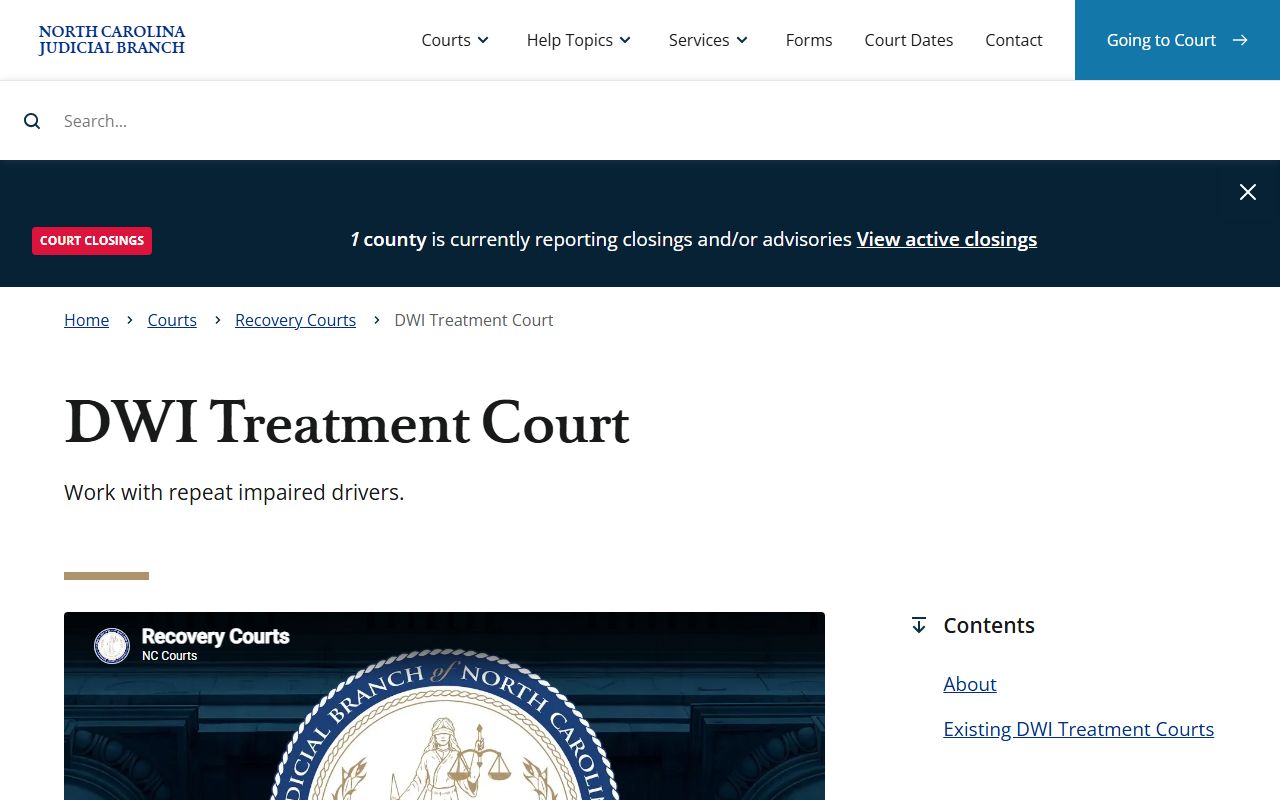
That program is an alternative to standard DWI prosecution and involves intensive supervision, treatment, and regular court check-ins for participants who qualify under District 40 criteria.
Deferred Adjudication and Defensive Driving in Buncombe County
North Carolina does not have a general deferred adjudication statute for traffic infractions the way some other states do. One disposition that functions similarly is prayer for judgment continued, commonly called PJC. When a court enters a PJC, it finds the defendant guilty but does not enter a formal judgment. Used strategically, a PJC may limit the points that flow to the driver's record and the insurance consequences, but the rules are complex. A PJC still appears in the court record. It is not the same as a dismissal. Each driver is generally limited in how often a PJC can be used before it stops offering protection from points, and the rules differ for insurance purposes versus license points.
Defensive driving courses are sometimes agreed to as a condition of a favorable disposition, but North Carolina courts do not have a statewide mandatory course program that automatically removes a ticket from the record. Whether a course is helpful in a specific Buncombe County case depends on the facts, the charge, and the judge. An attorney or the Public Defender's office can advise on whether a course or other mitigation is worth pursuing before the court date.
Sealing or Expunging Buncombe County Traffic Records
North Carolina's expunction statutes cover some traffic-related records, but eligibility depends on the specific charge, the disposition, the person's age at the time, and the time that has passed since the case closed. The most commonly used expunction pathways for traffic matters are dismissals and not-guilty findings. Under N.C.G.S. 15A-146, a person whose charge was dismissed or who was found not guilty may petition for expunction. That removes the case from the public court record. A conviction, on the other hand, is harder to expunge, and some traffic-related misdemeanor convictions may qualify under N.C.G.S. 15A-145.5 after a waiting period if the offense is nonviolent and other eligibility conditions are met.
Expunction petitions for Buncombe County cases are filed with the Clerk of Superior Court at the courthouse. The process typically requires a petition, supporting affidavits, and notice to the District Attorney's office. A judge reviews and signs the order. Once granted, the expunged record should no longer appear in eCourts public search, but the driver may still need to address the state driver record separately with NCDMV. Anyone seeking to expunge a Buncombe County traffic record should consult the N.C. Judicial Branch expunctions help page or speak with an attorney for guidance on eligibility and steps.
Fees for Buncombe County Traffic Record Copies
Court copy and certification fees for Buncombe County traffic records are set by statewide North Carolina court cost rules, not by the local courthouse alone. The specific amounts can change when the legislature or the N.C. Judicial Branch updates the fee schedule, so the best practice is to contact the Buncombe County Clerk of Superior Court directly before requesting copies. The Clerk's office at 60 Court Plaza, (828) 259-3400, can confirm current amounts for plain copies, certified copies, and any search fees that apply to traffic record requests. Online views through eCourts are free to the public. State driver records are a separate request to the NCDMV and are governed by a different fee schedule set by the DMV.
| Item | Amount / Notes |
|---|---|
| Online case view (eCourts Portal) | Free to the public; not a certified copy |
| Plain copy of a traffic case record | Set by statewide N.C. court cost rules; confirm current amount with the Clerk of Superior Court, (828) 259-3400 |
| Certified copy of a traffic case record | Set by statewide N.C. court cost rules; confirm current amount with the Clerk of Superior Court |
| State driver record (separate DMV file) | Separate fee set by NCDMV; request through the NCDMV driver records service |
| Online traffic fine payment (eligible cases) | Processing fee added for credit/debit card payment through the eCourts Portal; no processing fee for money order or certified check by mail |